By this point, you know Motul’s NGEN Core oils can come from re-refined base stocks and still meet modern performance standards, and you’ve seen how that stacks up in performance and modified cars. The next piece of the puzzle is the stuff in the smaller bottles: fuel and oil additives.
These cleaners, boosters and treatments are often sold alongside NGEN oils, especially in “pre-MOT” bundles and service packages for UK garages. The big question is whether they genuinely save money – in fuel, repairs or emissions retests – or just make the receipt longer.

What do fuel and oil additives actually do?
In broad terms, Motul’s additives fall into a few two main groups: those you add to the fuel system, and those you add to the oil system.
Fuel system cleaners
These are added to petrol or diesel tanks and designed to do the following jobs:
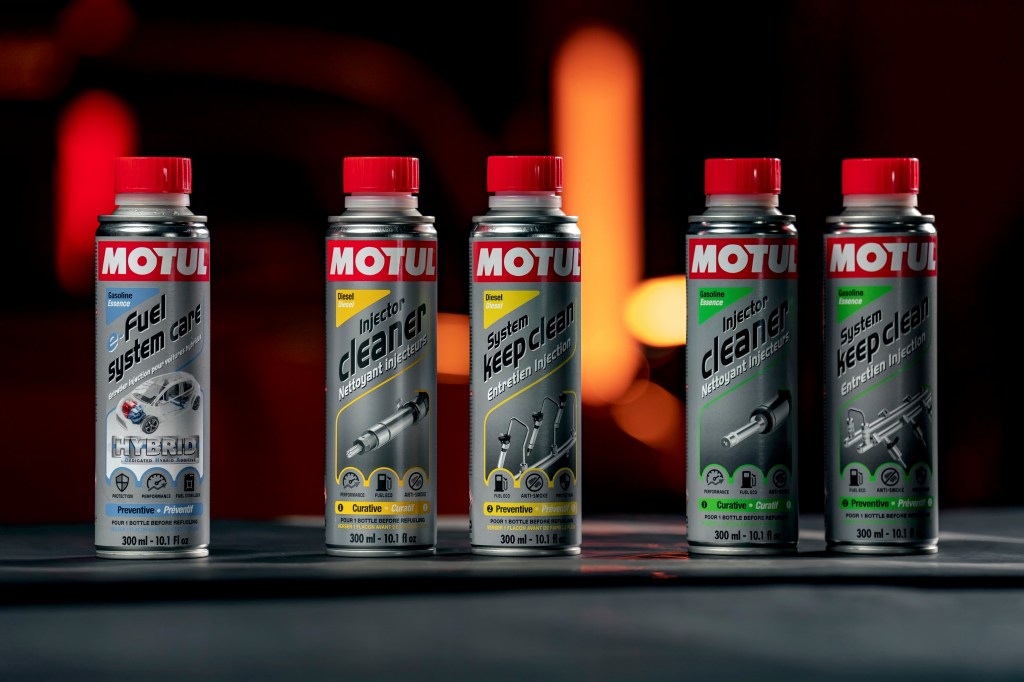
- Clean injector nozzles and intake valves (particularly important on port-injected and some GDI engines).
- Remove or reduce deposits that disturb spray patterns or airflow.
- Help stabilise combustion and reduce HC/CO emissions for borderline MOT tests.
Motul also offers “pre-MOT emission solutions” that package these cleaners together as part of a service upsell – ideal for cars at risk of failing emissions.
Oil circuit additives
Again, there are many additives available, each one designed to do a different job. But, generally speaking, the two types that Fast Car fans will find most useful are:
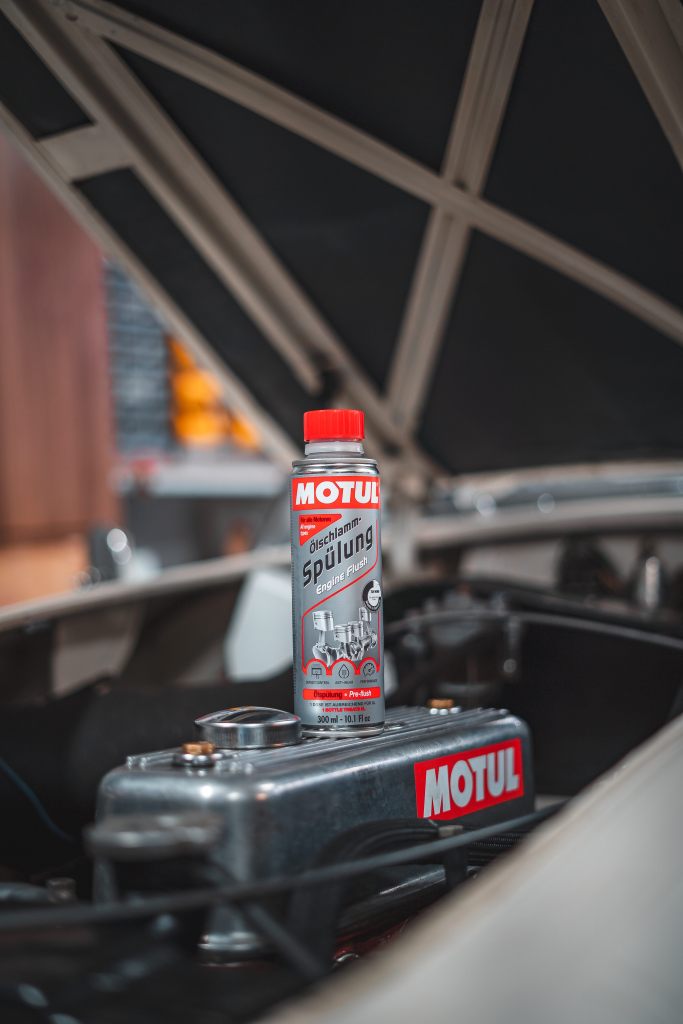
- Engine flushes: Short-lived treatments used just before an oil change to dissolve sludge and varnish, helping the fresh NGEN oil start clean.
- Detergent/anti-friction boosters: Additive concentrates designed to top up or tweak the oil’s properties between services, typically in older or higher-mileage engines.
These products have to be compatible with modern low-SAPS oils and aftertreatment systems; using something not designed for DPF/GPF cars is a fast way to buy a new filter you didn’t plan on.
Octane/cetane improvers
If there’s one thing modified car fans and tuners are always looking for, it’s extra power and performance. And that’s exactly what octane boosters and cetane improvers provide.
Octane boosters work in petrol engines, and help suppress knock in marginal fuel situations or mildly uprated engines. Always handy to have a bottle in the glovebox in case you get caught short and can’t fill up with Super Unleaded anywhere!
Cetane improvers do the same thing for diesels. They help ensure smooth combustion, reduce noise, and sometimes help with cold starts and soot too.
Used correctly, these support calibration targets and can reduce the likelihood of knock or rough running when fuel quality is poor.
How additives complement NGEN re-refined oils
NGEN Core is all about the base oil story – recycled content, lower carbon, PCR packaging – but once it’s blended, it’s still a modern, additive-rich lubricant. Additives in separate bottles sit around that system rather than replacing it.
Tip 1. Cleaning before switching to NGEN
If you’re moving a tired but saveable engine onto a fresh NGEN grade, an engine flush and a tank of fuel system cleaner can be a smart once-off investment. The flush helps dissolve old deposits so the fresh RRBO-based oil isn’t immediately contaminated with legacy sludge. The fuel cleaner helps stabilise combustion and can reduce blow-by and soot, helping your new oil stay cleaner for longer.
For example, a 120k-mile BMW N52 that’s been on cheap supermarket oil and short journeys might benefit from a careful flush, fresh NGEN oil (with the correct BMW approval) and a fuel cleaner, followed by shorter initial intervals to let the system stabilise.
Tip 2. Supporting emissions and DPF/GPF health
We all know the fear that an MOT emissions test can fill us with. And if your car is flirting with MOT limits or throwing occasional DPF regen issues, Motul’s “pre-MOT emission solutions” bundles make a lot of sense.
Combined with a high-quality NGEN oil that meets the right ACEA low-SAPS category, the right additives can:
- Reduce injector and intake deposits that lead to rich running.
- Improve combustion efficiency to lower soot loading.
- Help avoid expensive fails and forced regenerations.
That’s a direct financial saving if it lets you skip a re-test fee or a premature DPF clean.

For highly-tuned or hard-driven cars, regular use of carefully chosen additives can really help you keep on top of your engine’s health. If you’re pumping extra amounts of fuel through injectors (or using exotic ethanol blends), a fuel system cleaner can really help keep injector patterns sharp – crucial for optimal performance.
A clean engine is a happy engine. Unwanted deposits on the pistons can cause everything from poor performance to catastrophic LSPI events. Using an engine flush washes these out with every oil change to keep your internals fresh.
Finally, we know the importance of fuel octane ratings. There’s a high likelihood your car’s been mapped to run on premium (97-99RON) fuel. Filling up with lower octane fuel is just asking for detonation. That’s where a top-up can of octane booster can really save your wallet!
Used alongside NGEN Core oils that already meet API SP and relevant ACEA categories, this is about maintaining the performance envelope you’ve paid for, not chasing mythical gains.

When do additives actually save money?
The good cases
Additives are most likely to pay for themselves when:
- You’re fixing a specific problem: borderline emissions, known injector issues, mild knocking on marginal fuel, sticky hydraulic lifters.
- You’re cleaning up before a long ownership run: a targeted clean plus a switch to NGEN could extend engine life and let you safely use longer OEM intervals again.
- You’re protecting expensive hardware: injectors, high-pressure pumps, DPFs, GPFs and cats are all pricey. Avoiding even one replacement or forced clean can dwarf additive costs.
In these cases, the combination of NGEN oil (lower carbon, high performance) and the right additive can give you a lower total cost of ownership and a better sustainability story.
The not-so-good cases
Additives are unlikely to save you money when:
- You’re pouring random products into every tank “just in case”.
- You’re trying to mask serious mechanical issues – burning oil, worn rings, failing injectors – that really need a spanner, not a bottle.
- You’re stacking multiple overlapping treatments that duplicate each other’s chemistry.
In those scenarios, you’re just spending extra to mask the symptoms of an underlying issue. There’s no magic fix, and you simply need to spend the money of fixing the problem.
 _13A0646.jpg
Safety, compatibility and NGEN-specific caveats
A few hard rules if you’re pairing additives with NGEN Core oils:
- Follow Motul’s own guidance. Use only additives Motul says are compatible with low-SAPS, DPF/GPF-equipped engines if that’s what you drive. [VERIFY FROM MOTUL TECHNICAL DATA]
- Don’t exceed treat rates. More is not better; some chemistry becomes counter-productive or can harm seals when overdosed.
- Respect warranties. If a dealer or OEM explicitly bans certain types of additives, don’t give them an excuse to refuse goodwill. Stick to products that align with your handbook and Motul’s recommendations.
- Be cautious on motorcycles and wet clutches. Many bike oils – including NGEN Core motorcycle products – are tuned to meet JASO MA2 friction specs for clutches. Random friction modifiers in additives can ruin that balance.
Bottom line: when should you reach for additives with NGEN?
Use additives as targeted tools, not lifestyle accessories. If you’ve got a specific problem to solve, or you’re prepping a car for a long and hard life on Motul NGEN oils, the right fuel and oil additives can absolutely save money on fuel, repairs and MOT drama.
But the foundation is still the oil in the sump. Get the right NGEN grade, with the right OEM approvals, then layer additives on top for clearly defined jobs – not because the counter guy said it was “good stuff, mate”.
The post Can Additives Save You Money? How Motul Treatments Work appeared first on Fast Car.
Leia Mais.
